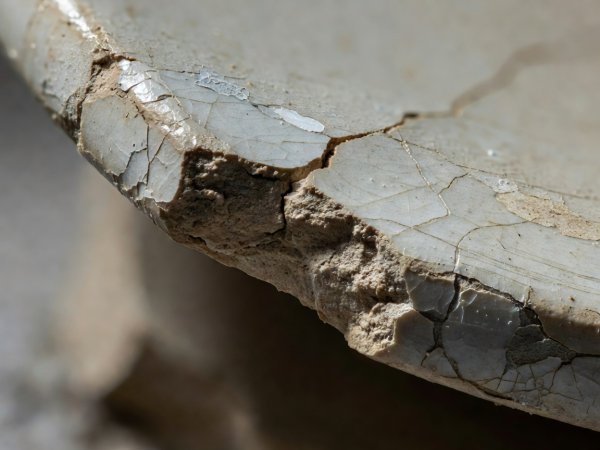
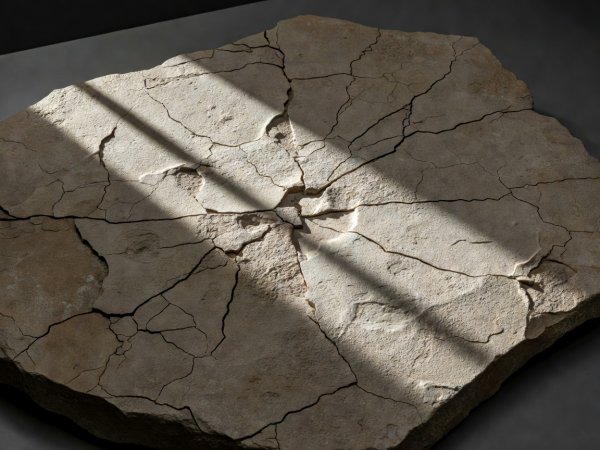
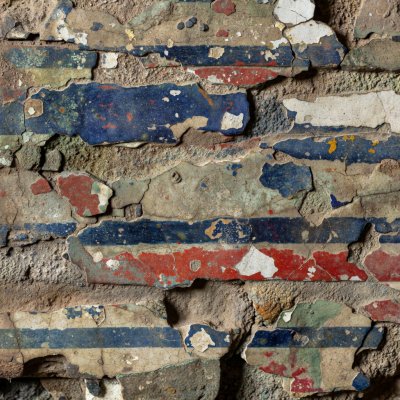
A broken edge is not an empty space. It holds clues about material, manufacture, use and loss.
Digital tools can help specialists connect those clues. AI can suggest what might fit. Neither turns a convincing image into a recovered historical fact.
Begin with what survives: a surface, a fracture, a trace of colour. Our dossier follows the object from careful capture to a proposed whole—and keeps the uncertain parts visible.
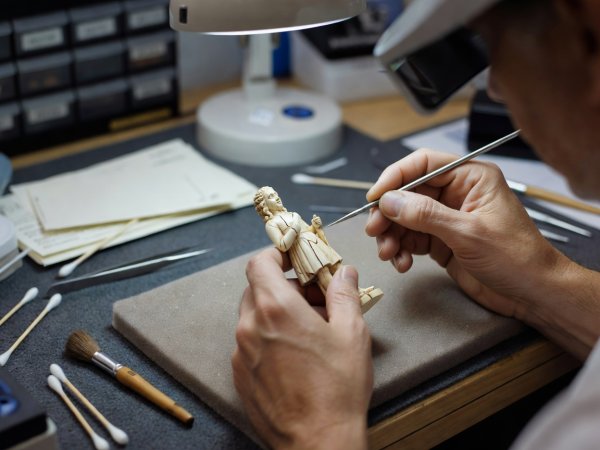
01 / Surviving material: the starting evidence.02 / Surface capture: record before interpreting.03 / Specialist judgement. Illustrative photographs, not a named restoration record.
First, observe
Read the Surviving Surface
Photographs, measurements and scans answer different questions. A useful record connects each digital observation to the physical object.
OBSERVED EVIDENCE
A scan is a measurement, with limits
Photogrammetry can estimate surface geometry from overlapping images. Reflectance Transformation Imaging can reveal shallow marks. Neither automatically identifies a material or reconstructs its missing history.
Can AI reveal exactly what a missing part looked like?
Usually not. It can generate candidates consistent with selected evidence, but several different histories may produce similar surviving fragments. A plausible completion is not proof.
Does a digital reconstruction change the original object?
A purely digital proposal does not physically alter it. However, scanning may require handling, and a digital proposal may influence later treatment. Those decisions still require conservation oversight.